
Guest post: Climate emotions in early childhood: why we need a new way of thinking
Posted 5th February 2026
By Jane Spiteri
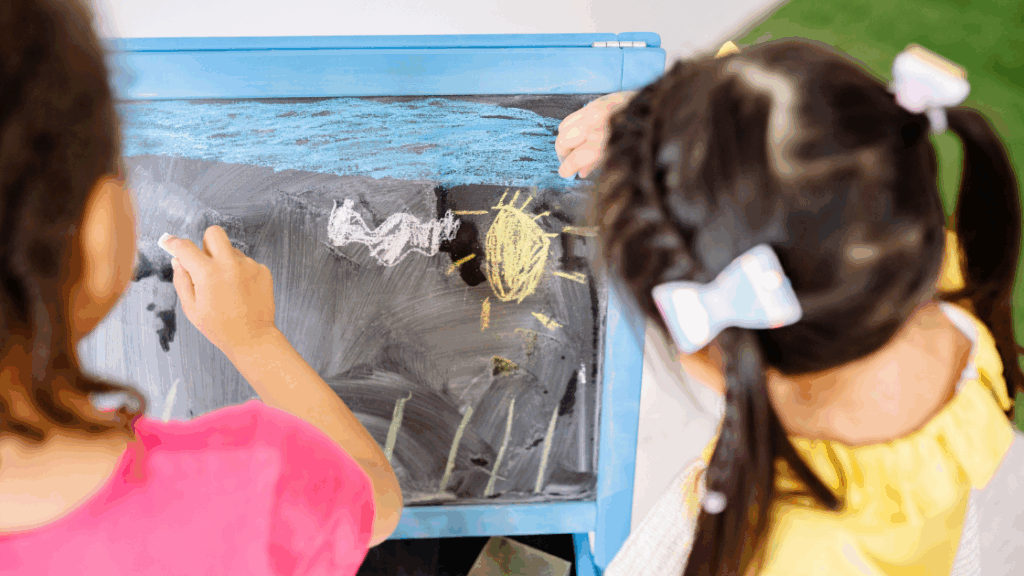
When we talk about climate anxiety or eco-emotions, we usually picture teenagers marching with placards or adults lying wide awake at night worrying about the future. Rarely do we imagine a four-year-old quietly lining up toy animals because “the forest is on fire”, or a five-year-old asking whether the sea will still be there when they grow up.
And yet, young children are already living in a warming world and experiencing it emotionally.
In my recent paper, Climate emotions in early childhood: a conceptual framework for research, intervention, and policy action, I argue that early childhood is not a climate-neutral stage of life. It is a period of profound emotional sensitivity, rapid neurodevelopment, and relational dependence. In fact, these are the conditions under which climate change becomes emotionally meaningful, even when children cannot articulate it in words.
This blog post shares the core ideas of that paper in a more conversational way. It asks a simple but urgent question: what would it mean to take young children’s climate emotions seriously, without frightening them, medicalising them, or silencing them?
Beyond “climate anxiety”: what young children actually experience
One of the problems in current debates is language. The terms climate anxiety and eco-anxiety are often used as catch-all, but they do not sit comfortably with early childhood.
For young children, emotional responses to climate change are rarely expressed as explicit anxiety about the future of the planet. Instead, young children’s climate emotions in my research manifested as worry about animals or familiar places, sadness linked to environmental loss, confusion when adults appear distressed, intense play themes involving disasters or rescue, and bodily signs such as sleep disturbance or clinginess.
These emotional responses are not necessarily pathological. In fact, many are developmentally appropriate emotional reactions to uncertainty, loss, or moral concern. Labelling such emotions too quickly as “anxiety” risks doing harm, both by pathologising children and by discouraging adults from engaging in open, supportive dialogue about climate change. This is why in my paper I adopt the broader concept of climate emotions, to include the full range of feelings young children may experience in relation to climate change, including fear, grief, anger, empathy, care, hope, and curiosity.
A developmental systems view: four domains that matter
To move beyond fragmented approaches, in my paper, I introduce the Developmental Systems Climate Emotions Framework (DSCEF). Rather than asking “Is this child anxious?”, the framework asks “What systems are shaping this child’s emotional experience?”
The DSCEF identifies four interdependent domains.
1. Neurodevelopment and emotion regulation
Young children are still learning how to recognise, name, and regulate emotions. Their brains are not yet equipped to process abstract, global threats without adult support. Climate-related information can therefore feel overwhelming unless it is carefully scaffolded.
2. Caregiver and educator co-regulation
Children do not regulate climate emotions alone. They borrow calm (or fear) from the adults around them. When adults avoid the topic around climate change, catastrophise, or feel emotionally flooded themselves, children often sense this. Even more concerning is the fact that at a young age children fill in the gaps with their own interpretations.
3. Symbolic and imaginative mediation
Climate emotions often surface symbolically long before they are spoken. Therefore, play, storytelling, drawing, and role-play are not “extras”. They are the primary ways young children process emotionally complex realities such as climate change and its impacts.
4. Sociocultural and environmental narratives
Children are living in environmental change and they are experiencing the impacts of climate change. Moreover, they are immersed in stories about climate change, through media, school, and family conversations. Whether these narratives emphasise doom or collective care profoundly shapes children’s emotional orientation to the future.
Crucially, these four domains are interactive, not linear. A child’s distress cannot be understood without attending simultaneously to development, relationships, imagination, and culture.
Why this matters for early childhood education
For early childhood educators, this framework offers reassurance and guidance as well as challenge.
Reassurance, because it confirms that emotional responses to climate change are not signs of failure. Rather, they are signs of care, awareness, and relational attunement.
Guidance, because it shows how educators can help young children navigate climate emotions in a safe space, and in ways that encourage resilience.
Challenge, because it asks us to rethink how climate change education is approached in the early years. Information-heavy, problem-saturated approaches risk overwhelming children. Silence, on the other hand, leaves them alone with their feelings.
What children need instead are:
- emotionally available adults
- honest but hopeful conversations
- space for symbolic expression
- small, meaningful opportunities for agency and resilience
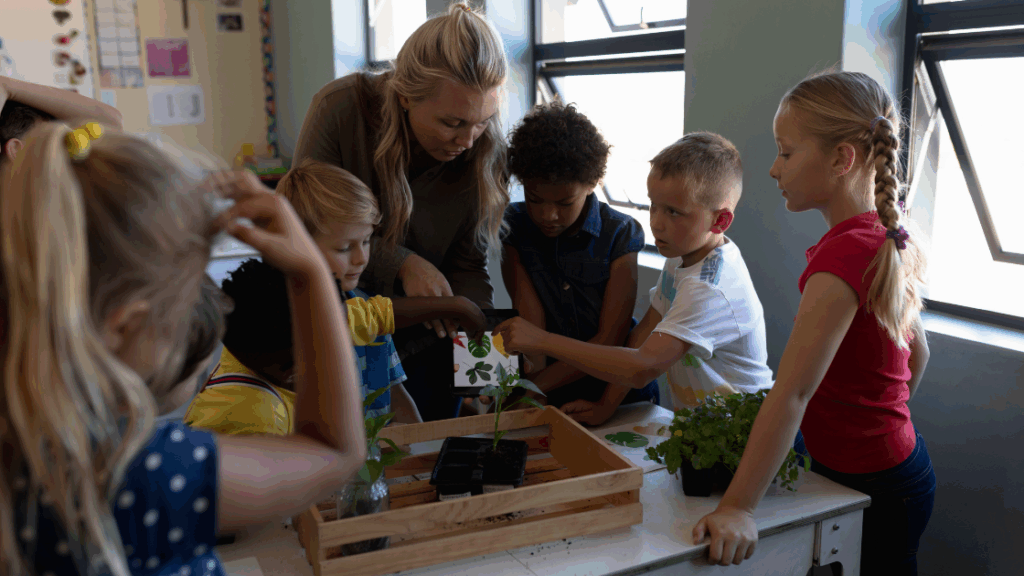
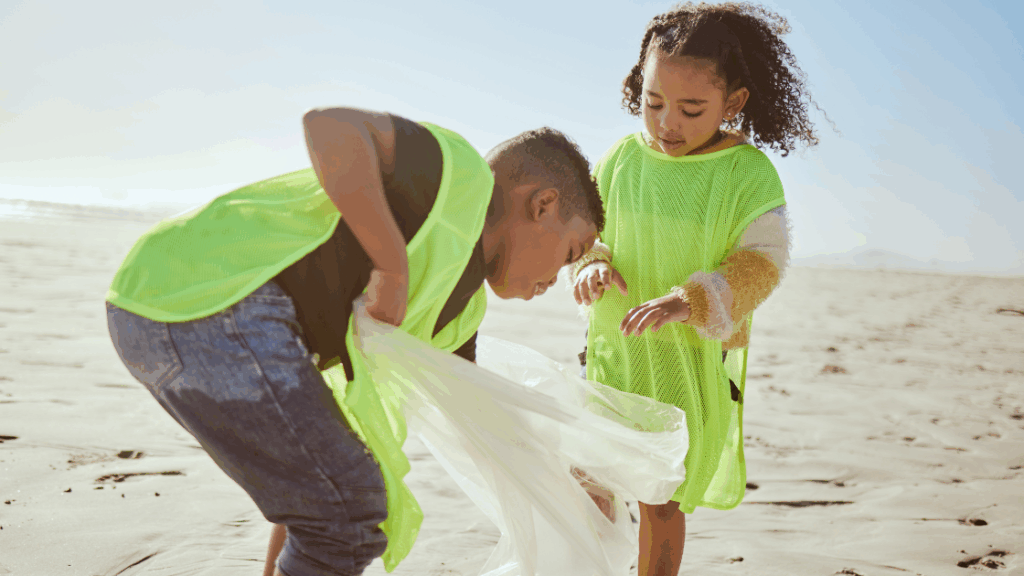
Planting seeds, caring for animals, restoring a playground corner, or telling stories about collective repair can be emotionally powerful acts, not because they solve climate change, but because they help children develop a relationship with nature. Therefore, children experience themselves as connected and capable, rather than helpless.
Policy implications: climate emotions as a public good
My paper also makes a policy argument: young children’s climate emotions are not just an educational issue, but a public health, and social and intergenerational justice issue.
Young children contribute least to climate change. Yet, they live with its emotional consequences across their lifespan. Supporting their emotional wellbeing requires:
- climate-sensitive early childhood curricula
- professional development for educators on climate emotions
- mental health support that includes educators and caregivers
- age-appropriate climate communication guidelines
- child-friendly green spaces as preventative wellbeing infrastructure
Failing to address climate emotions early does not make them disappear. It simply postpones them, often more strongly.
A final reflection
Children under eight are not too young to feel the impacts and intensity of a changing climate and a warming world. They are, however, too young to carry it alone.
If we listen carefully to their play, their questions, and their silences, we may find that early childhood offers not only vulnerability, but also profound ethical insight. Children remind us that climate change is not only a scientific or political problem, but an emotional and relational one.
Indeed, the early years is where meaningful change must begin.
Any views expressed in this post are those of the author(s) and do not necessarily reflect the official stance of their affiliated institution or EECERA.
About the Author

Jane Spiteri is a Senior Lecturer in the Department of Early Childhood and Primary Education within the Faculty of Education at the University of Malta. Her research is grounded in education for sustainable development, with a particular focus on early childhood education, climate emotions in the early years, outdoor and nature-based learning, climate change education, and the education of gifted and talented children.
Her work examines how young children engage cognitively, emotionally, and ethically with sustainability challenges, emphasising developmentally appropriate pedagogy, wellbeing, and children’s lived experiences of climate change. She has published in international journals and contributes to research, policy, and practice at the intersection of sustainability, education, and childhood.